In March 2026, we travelled from Denmark and had the pleasure of spending four days in Scotland meeting dementia researchers, practitioners, and people with lived experience of dementia. The visit included participation in a seminar and the Working With Dementia Network Plus conference, providing a valuable opportunity to exchange knowledge, discuss ongoing research, and explore future collaborations.
One of the projects we presented focused on a growing but often overlooked group in Denmark: people who develop dementia while still of working age. Dementia increasingly affects individuals who are employed, yet many leave the workforce early due to cognitive challenges, stigma, and limited workplace support. This can have significant consequences for health, wellbeing, identity, and quality of life. Research suggests that many people with dementia in the earlier stages can continue working successfully when appropriate adjustments and support are available. However, there is still limited knowledge about how workplaces can create the best conditions that enable people to remain in employment. Our study aims to address this gap by developing and testing a person-centred workplace intervention designed to support job retention, work participation, health, and quality of life among people living with early dementia. Through a combination of national mapping, co-design activities, and evaluation, we are working with people with dementia, employers, and other stakeholders to identify practical and sustainable solutions.
During our visit we were struck by the similarities between Denmark and Scotland. Both countries have comparable population sizes and similar proportions of people living with dementia. Yet we also observed that Scotland appears to be further ahead in several areas related to dementia inclusion, particularly in supporting people to remain active in working life and society.
A highlight of the visit was the Working With Dementia Network Plus conference on 25 March. We were impressed not only by the topics discussed but also by the way the event was organised. People living with dementia, family members, researchers, and professionals were represented throughout the day, creating a genuinely inclusive environment. The format encouraged dialogue and knowledge sharing rather than one-way presentations, ensuring that lived experience remained at the centre of the conversations.
The visit also opened the door to exciting new research collaborations. We had the opportunity to connect with colleagues who share our interest in dementia, work, and inclusion, and we look forward to strengthening these relationships in future projects.
Another memorable experience was visiting the Scottish company ACS that combines sustainable production with a strong commitment to workplace inclusion. Seeing inclusion embedded in everyday organisational practices demonstrated how workplaces can benefit both employees and society when diversity is viewed as a strength.
We returned to Denmark inspired by the openness, engagement, and collaborative spirit we encountered in Scotland. The warmth, hospitality, and generosity shown throughout our visit made a lasting impression on us and reinforced the value of international exchange. The visit reinforced the value of international partnerships and reminded us that creating dementia-inclusive workplaces is a shared challenge that benefits from learning across borders. Together, we can help ensure that more people living with dementia are supported to remain active, valued, and included for longer.
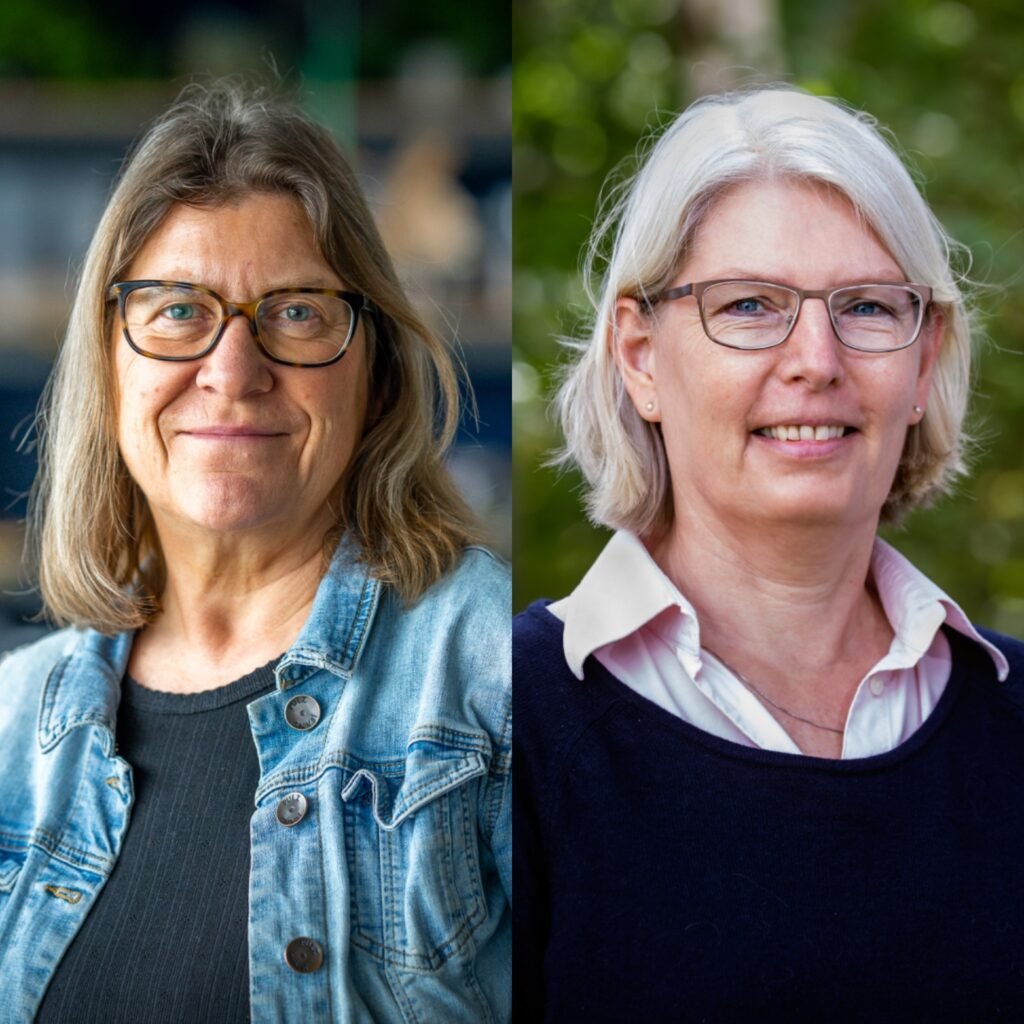
Hanne Peoples (pictured on the left wearing a blue jacket) is Associate Professor at the Health Sciences Research Center, UCL University College
Hanne Kaae Kristensen (pictured on the right wearing a white shirt) is Professor, Health Sciences Research Center, UCL University College and University of Southern Denmark
Hanne and Hanne have also kindly shared three articles from the pre-study phase of the WORK-DEM project:
(Peoples, H., Maersk, J.M.; Morgan S. Kristensen, H.K…(2026). Reimagining Dementia and Inclusive Work Environments – Giving voice to those it concerns. Dementia. Journal of Vocational Rehabilitation. https://doi.org/10.1177/10522263261449122)
(Peoples, H.; Maersk, J.L.; Kristensen, H.K. (2024) Enabling work for people with dementia – Recommendations for interventions: A mixed-methods review. 23(8): 1382-1415. https://doi.org/10.1177/14713012241267122)
(Maersk, J.L.; Peoples, H.; Kristensen, H.K.; Præstegaard, J. (2024). A meta-ethnography of identity formation among people with early-onset dementia. British Journal of Occupational Therapy, 87(9):530- 45. https://doi.org/10.1177/03080226241253699)