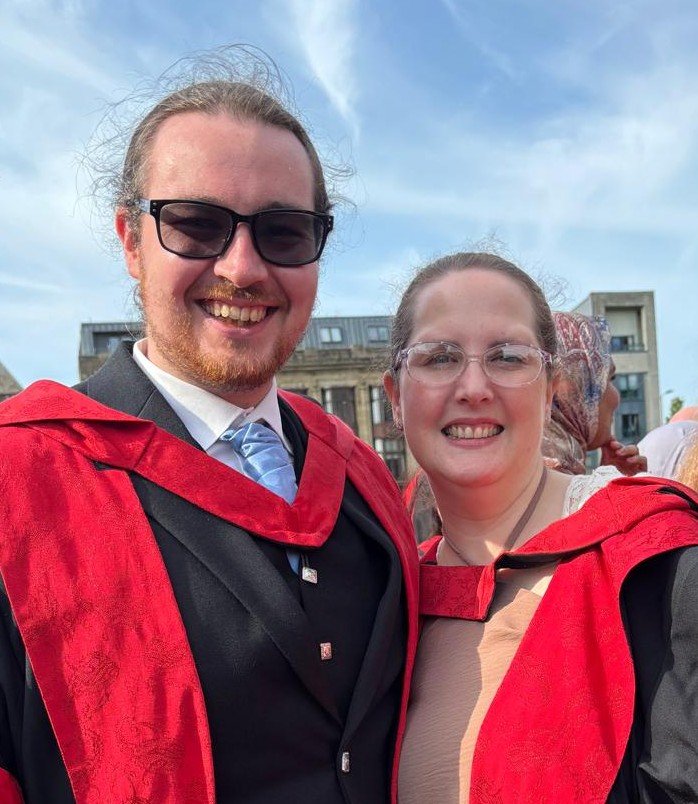
Our Early Career Researcher Forum (ECRF) supports researchers who have a professional interest in dementia and employment (ECR is a common anacronym in academia for ‘early career researcher’). Here ECRF members Rachel and Connor discuss his recent presentations, with advice for other ECR’s:
1. Connor, can you tell us a little about your recent presentations?
Over the last month or so, I have presented at four separate events to share initial findings from the dementia and employment tribunal study:
- An online webinar hosted by the Young Dementia Network alongside colleagues from Working with Dementia Network Plus: “New insights on working with dementia”.
- A recorded presentation as part of a symposium titled “Under-recognised Issues in Transitions in Dementia Care” as part of the 2026 Faculty of the Psychology of Older People Annual Conference organised by the British Psychological Society.
- In-person, as part of the Faculty of Society and Culture conference at Northumbria University.
- An overview of the study for the network’s Lived Experience Panel (online).
These presentations outlined the work of our network and why dementia is a workplace concern, with a focus on the legal implications of a diagnosis for employers and employees.
2. Why do you think presentations like these are important?
They are an accessible way to disseminate research to different audiences, and you can get feedback from a range of different perspectives. This can strengthen research. For example, by gaining new insights into the implications of results. This is particularly pertinent for dementia research because listening to people living with dementia and carers should be a fundamental component of a successful project.
3. What were the highlights, for you as the presenter, from the presentations?
A key highlight of the Young Dementia Network webinar was hearing from those with lived experiences of dementia and employment. A highlight of symposium presentation was hearing from the chair that several attendees expressed interest in connecting and exploring how our work could be built on by other research. The Faculty of Society and Culture conference was my first in-person presentation since completing my PhD, and I had opportunity to get feedback from the specialised legal audience on our employment tribunal study.
4. Which do you prefer: presenting online, in the room with others or a hybrid approach?
There’s merit to all three approaches. Online or hybrid approaches can allow presentations to be more accessible to those who would be unable to travel in person. On the other hand, in-person presentations often allow for deeper conversations. At conferences spontaneous conversations and opportunities for more questions can happen during breaks and networking time.
5. Can you share your top tips for presentations with us please?
Sure, my personal tips are:
- Enjoy it! Most audiences are supportive. They’re there because they are interested in your work.
- Know your audience and build your presentation around them.
- I rehearse slides numerous times to ensure I’m within the time limit. I find this helps calm my nerves- I can demonstrate to myself that I am well prepared, which means that on the day I can focus on enjoying the presentation and connecting with the audience.
- I build my slides around what I want to get out of the presentation or the brief that I have been given. This allows me to tailor the presentation to elicit a discussion on specific research areas, aligning with the audiences to keep them engaged throughout the presentation and encourage conversations.
- Finally, don’t overprepare the night before a presentation!
6. What other ways of sharing research do you think are important?
A fundamental way to develop a portfolio of research and grow your profile as a researcher is writing journal articles and getting these published. Reports and accessible summaries are a great way to make research available to wider audiences, who may apply findings to their own practice. Also blog articles, such as this one, can be a great way of de-mystifying research and making it accessible to everyone.
Thank you to Rachel and Connor for sharing their discussion with us for the blog. If you would like to find out more about the ECRF, please contact us (wwdnetworkplus@uws.ac.uk)
Rachel Allen is Impact Officer for Working with Dementia Network Plus.
Connor McDonald is Research Fellow at Northumbria University as part of Working with Dementia Network Plus. His research is exploring employment tribunal judgements and dementia. You can contact him via LinkedIn.