How can we model innovative and inclusive employment practices alongside labour markets where everyone is empowered to thrive and contribute?
Presentations by members of DEFIN – Young Dementia, National Dementia Carers Action Network and Michael Cusack, Chief Sustainability Officer at ACS Clothing.
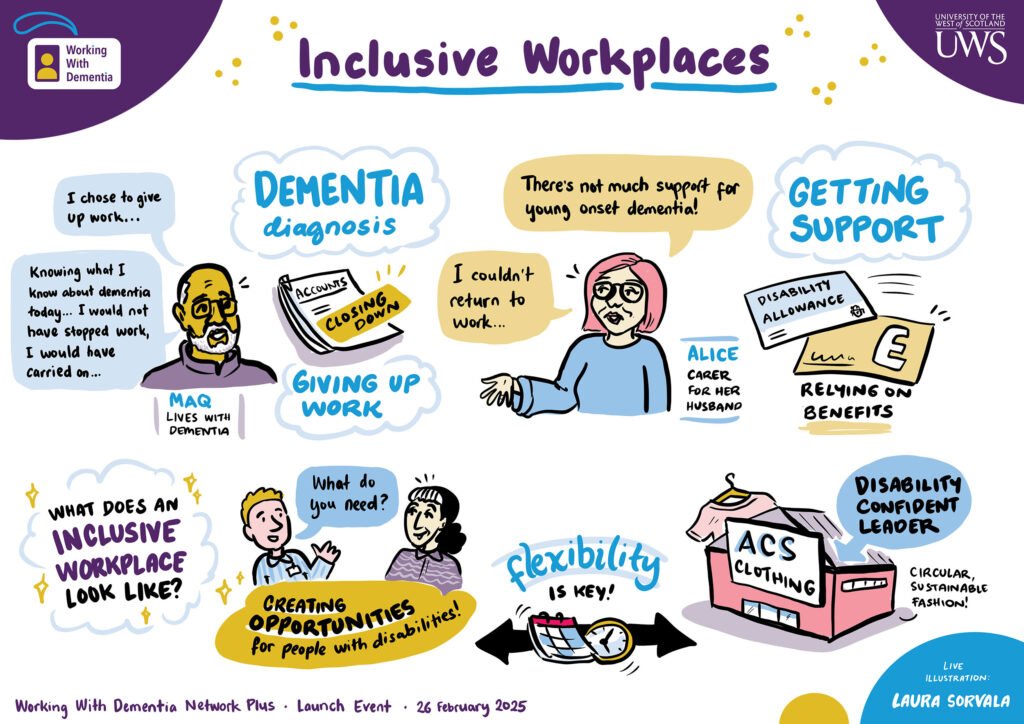
MAQ shared his experience of being diagnosed with frontotemporal dementia while still employed. He made the difficult decision to leave his career as an accountant, feeling he could no longer give 100% to his clients. His diagnosis profoundly impacted his family, both emotionally and financially. Once earning £150 an hour, he now found himself making just £150 a week.
Looking back, MAQ reflected that if he had been more informed about dementia, he might have chosen to continue working.
He added, “I always say that I have been diagnosed with dementia, but dementia doesn’t have me.”
Alice and her husband dedicated their entire careers to financial services, working on short-term contracts. Their lives took an unexpected turn when, in his mid-fifties, her husband was diagnosed with frontotemporal dementia. As his condition progressed, he struggled to meet his usual work standards, leading to the termination of his contracts.
For a time, Alice managed to work from home, but as her husband’s symptoms worsened, her caregiving responsibilities increased. The stress took a toll on her well-being, and eventually, she had no choice but to leave her job. With limited support services available for individuals with young-onset dementia, the situation remains challenging. Now, with both incomes lost, the 12 hours of support they receive each week is not enough for Alice to return to work. Forced to stop working at just 52, she faces an uncertain future, deeply concerned about the long-term impact on her own retirement plans.
Working with Dementia X ACS Clothing
We invited ACS Clothing, a Disability Confident Leader, to tell us about their employment practices.
- Promoting Fair Wages & Ethical Work – As a Living Wage employer, ACS ensures all employees receive fair compensation, fostering financial security and equality.
- Supporting People with Disabilities – As a Disability Confident Leader, ACS creates an accessible work environment where individuals with disabilities can thrive.
- Diverse Hiring Practices – ACS actively recruits individuals from disadvantaged backgrounds, including refugees, ex-offenders, and people with disabilities, providing equal opportunities.
- Skills Training & Career Development – ACS empowers employees by investing in training and professional growth, ensuring long-term career success.
- Commitment to Gender Equality – ACS promotes a fair and inclusive workplace, ensuring equal opportunities for all genders.
ACS provides a model of employment practice which could support people who are impacted by a diagnosis of dementia in the workplace.