In our last blog we outlined the co-produced research study we conducted exploring volunteering for people living with young onset dementia. Our findings suggest that taking part in volunteering can have many benefits, but because of dementia stigma and a lack of knowledge, people with dementia tend to be considered only in need of voluntary support. We propose that instead they should be recognised as capable volunteers with something to offer their community/society, who may also require some adaptions to the volunteering model to ensure they can meaningfully participate.
Interestingly, through the research we identified that a common way that people living with young onset dementia volunteer is through their involvement in research. The majority of involvement for people living with dementia in research is as participants. For example, people may take part in clinical trials to test a new drug, or participate in an interview study and share their experiences. Or people can be involved in the design and delivery of research, as co-producers. This type of involvement is typically less common, but it is an interesting, inspiring and growing field.
Lived experience involvement in the design and delivery of research is important for several reasons, firstly because doing so can keep research agendas (and subsequent findings) relevant to the wants and needs of the people that are living with certain conditions. Secondly, because co-researchers with lived experience can bring their unique skills, insight and perspectives to the process. Finally, it can be beneficial to the co-researchers to take an active role in research, to remain engaged and purposeful with their time and skills. Equally, it can benefit academic researchers to develop their understanding of the lived experience and to develop their research practice.
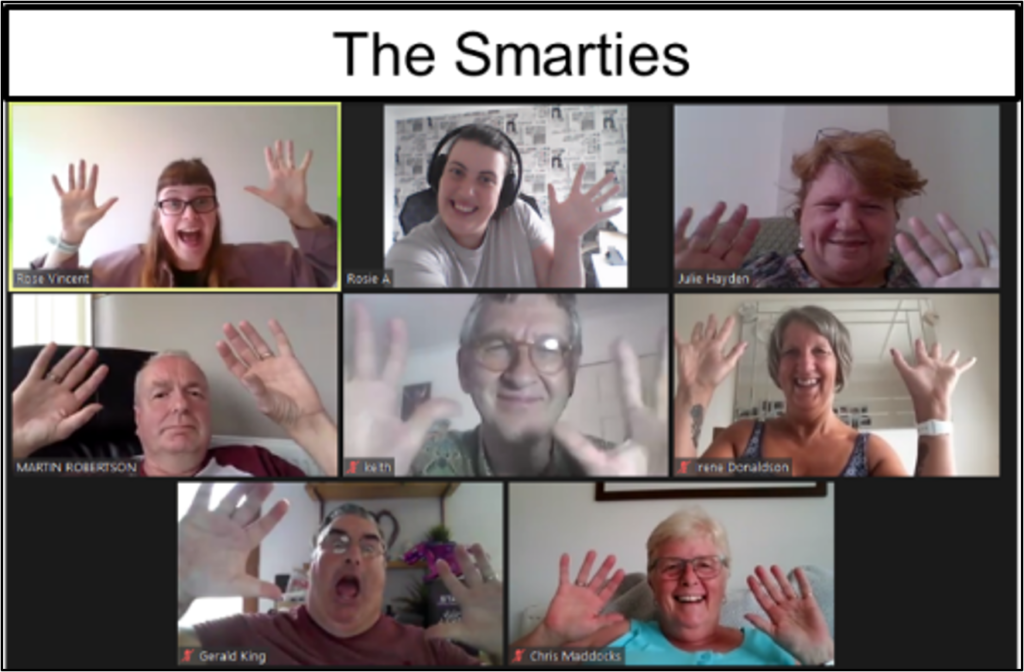
However, despite these benefits, at the time of doing our research in 2021-2022 there was little guidance on how to do meaningful co-produced research with people living with dementia. As such, we decided to pull together our top tips on co-producing research into a guide that could be shared with other researchers and people living with dementia who want to get involved in research. The result was our ‘Smarties Guide to Co-Production’ which you can access here. In the guide we share our thoughts on what should be done before a research study begins, outline important considerations about how co-production workshops should be conducted, and detail what should be done at the end of a study.
We are pleased to note that co-production in the field of dementia research has grown somewhat since our study. However, it is still important for researchers to recognise the value that people living with dementia can bring to the research process and findings, and to do what they can to adapt the process to ensure any invitation to involvement is not tokenistic. If you choose to co-produce your research then taking time get to know the co-researchers you are working with and building trust within the group is critical, as is recognising the different rationales for co-production and not loosing sight of them through the process. As before, we are always happy to chat about our research, share what we have learnt and to learn from others. For any further information please reach out to Rose at rose.vincent@nhs.scot
Rose Vincent is Team Leader at Enrich Scotland and is nearing the end of her PhD at the University of Edinburgh. We are grateful to Rose and the Smarties (Irene Donaldson, Julie Hayden, Gerry King, Chris Maddocks, Keith Oliver, Martin Robertson, Rosie Ashworth and Rose Vincent) for sharing these blogs with us. Photo used with permission.