
It was both an exciting and rewarding experience to take part in this year’s University of the West of Scotland Research Festival on 3rd June. Embracing the theme of ‘Curiosity in Action’, the team was delighted to showcase our new initiative and spark meaningful conversations within the UWS research community.
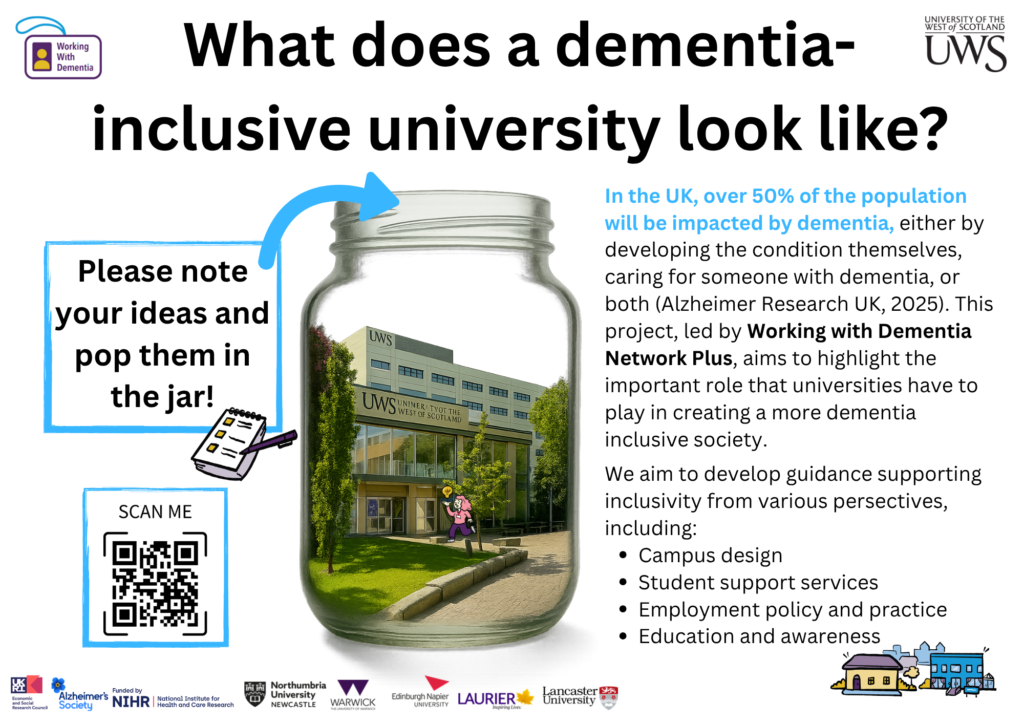
At the heart of our Dementia Inclusive Universities programme lies a simple yet powerful question: What does a dementia inclusive university look like?
We hoped that our question would invite curiosity and encourage the university community to reimagine the role of higher education in creating inclusive environments for everyone.
In the UK, over half of the population will be impacted by dementia in some way—whether by developing the condition themselves, caring for someone who is living with dementia, or often both (Alzheimer’s Research UK, 2025). This highlights just how important it is for all organisations, including universities, to play an active role in building a more inclusive and supportive society.
The Dementia Inclusive Universities project seeks to explore what this looks like in practice. We are particularly interested in understanding:
• How university employees affected by dementia are supported to remain in and thrive at work
• How students impacted by dementia are enabled to continue their studies and feel fully included
• How people living with dementia, along with family carers, can feel connected to and involved in the wider university community
• How dementia awareness and education are embedded into university programmes to help shape a more inclusive future workforce
• How campuses can be designed using inclusive principles to better support the needs of people living with dementia
By exploring these areas, we hope to spark conversation, share learning, and ultimately help universities become places where everyone—whatever their experience with dementia—feels valued, supported, and able to participate fully.
Throughout the event, our poster became a focal point for discussion. We were encouraged by the level of interest it generated and the thoughtful conversations it sparked. Attendees shared their own perspectives, asked insightful questions, and explored what meaningful change could look like in practice. We invited everyone to add their comments to the jar – everyone’s contributions will help us shape the project to the next stage. The jar was not only practical but symbolic of the need for inclusion; and the breaking down of barriers that can exclude those affected by dementia from spaces like universities.
We’re excited to keep the conversations going and to continue shaping a more inclusive community together.