
Research
Welcome to our research portal. Please click on the links below to learn more about our different research projects:
Guidance for Life, Work and Career
Priority Setting Using Nominal Group Technique
Guidance for Life, Work and Career
Our Guidance for Life, Work and Career project aimed to co-produce and test an innovative approach to supporting people living with dementia following diagnosis. We worked with people living with dementia, career guidance professionals, and other stakeholders to co-produce resources designed to support decisions related to employment and career. You can find a link to download the summary report below:
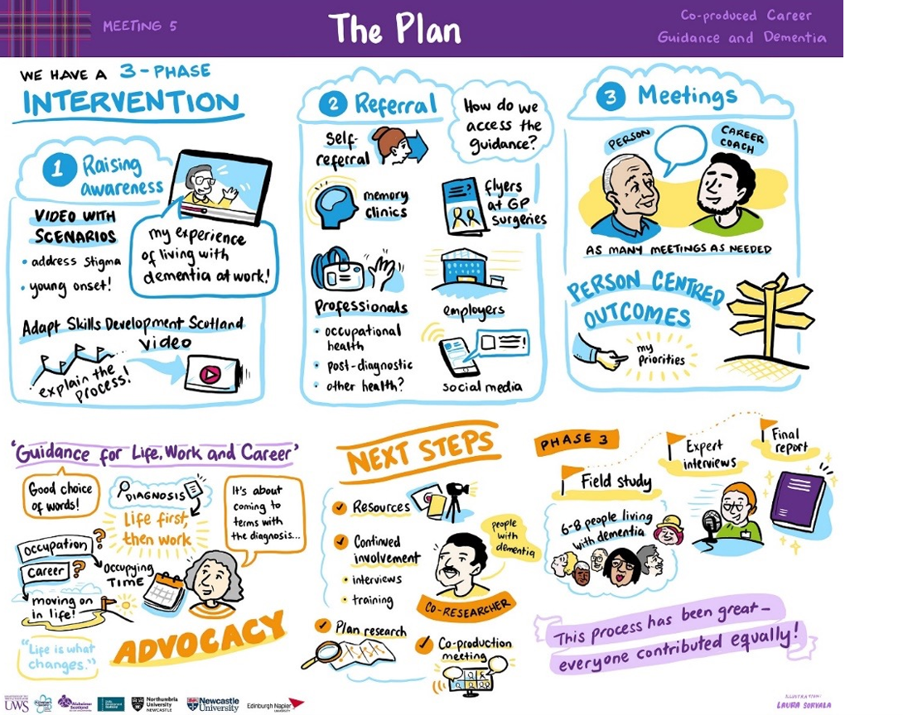
The video below explains the ‘Guidance for Life, Work and Career’ intervention resource:
Priority Setting Using Nominal Group Technique
This project, led by Dr. Eileen Harkess-Murphy with Dr. Rachel Allen (now McHendry), involved seven focus groups in the autumn of 2025 (two for those living with a dementia diagnosis, two for those with experience of caring for someone with a diagnosis, one for employers, one for policy professionals and one for academics and researchers). The groups focused on what needed to happen to improve the work-related experiences of people living with dementia and family carers. A project summary is now available below. A video explaining the focus group methodology, ‘nominal group technique’, can also be found below:
Download – Project Summary
Download – Video about nominal group technique
Following this project and reflections on their approach, Eileen and Rachel published a short article online with Times Higher Education about pseudonym use in research. You can access the article by clicking the button below:
Six questions researchers should ask before assigning pseudonyms
Rapid Evidence Reviews
This project, led by Prof. Carol Holland with Dr. Kiera Kenny, involves conducting four to five rapid evidence reviews to add to the field of employment and dementia. The reviews will be focused on workplace supports for employees living with dementia, the economic impacts of young-onset dementia, labour market barriers and facilitators for informal caregivers and brain health in the workplace. Further information and resources will be available as the project progresses.
Dementia in the Workplace: A Comparative Doctrinal and Empirical Analysis of Employment Tribunal Judgments in the UK, Canada and Australia
This project, led by Dr. Lyndsey Bengtsson with Dr. Connor McDonald, aims to analyse employment tribunal judgments relating to dementia across the UK, Canada, and Australia, and to understand how legislation is applied in workplace contexts. This research will provide pertinent learning outcomes for both employers and employees in this area, and may also offer recommendations for legal reform. An accessible summary of findings from this study will soon be available.
In June 2026, Connor presented a summary of the study to date at the Faculty of the Psychology of Older People conference via a recording, which is available via the link below:
Employment Tribunal Judgements: Short Presentation
Dementia Inclusive Universities
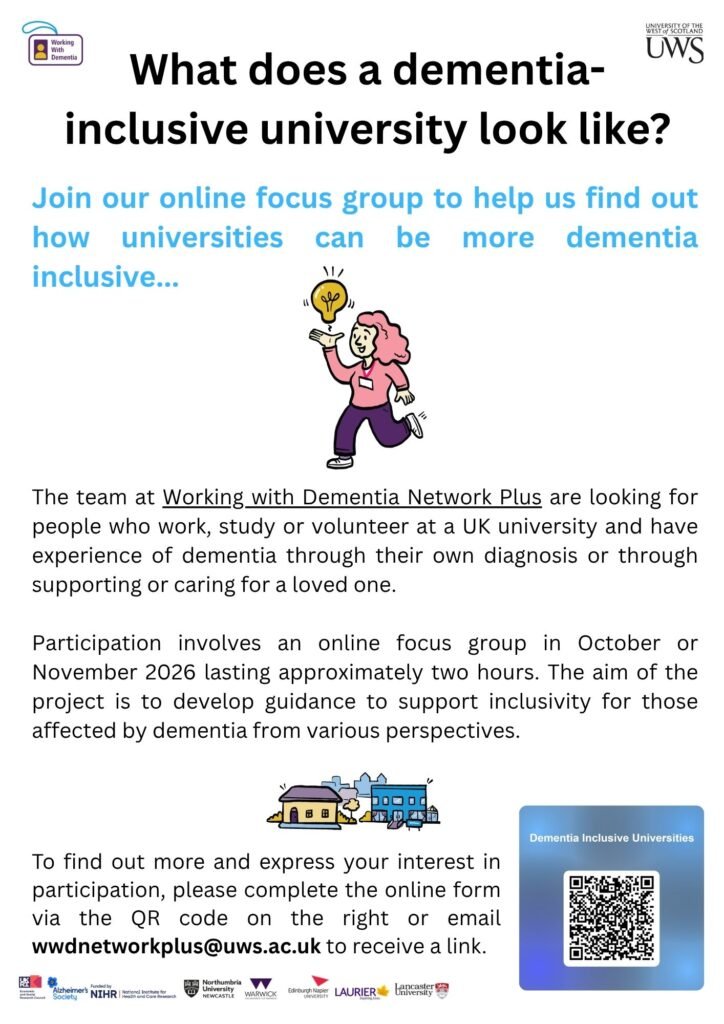
Data collection for this project has now started and a number of focus groups are planned for October and November 2026. If you study, work for or volunteer with a UK university and would like to know more about participating, please complete an expression of interest form here.
Research Grant Fund
You can read more about our Research Grant Fund on our dedicated page here.
When projects supported through the fund are launched in Spring 2027, we will update this page with more information.