Back in 2013, I started as a research fellow with Professors Pauline Banks, Debbie Tolson and Mike Danson on the study ‘Dementia in the Workplace: the potential for continued employment post diagnosis’. One of my first jobs was to recruit people to take part in stakeholder interviews. Which meant my first job was trying to convince people that dementia in the workplace was something that needed to be spoken about. I had a variety of experiences in that project, from people excited that the research was happening because they knew firsthand the challenges people with dementia experienced in work, to people declining to be interviewed because ‘people with dementia don’t work’ or ‘employment is not a priority’.
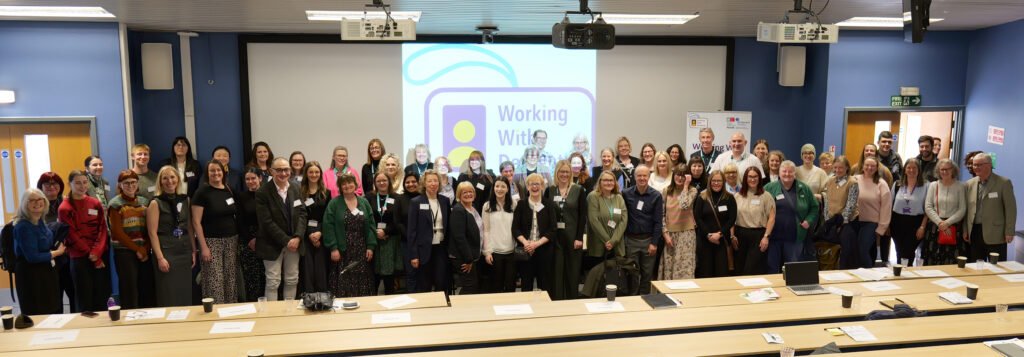
Thirteen years ago, if you had told me that on 25th March 2026 we would host the Working with Dementia Conference at the UWS Paisley Campus, and that it would be attended by over 100 people who not only recognized dementia as a workplace issue, but were committed to making things better, I wouldn’t have believed you. In terms of changing attitudes, this is amazing progress. As I stood there on Wednesday as lead of the Working with Dementia Network, I was in awe of all the people who have played a part in the journey to get here.
People like the late Stewart Black and Wendy Mitchell, who both presented their experiences of working with dementia at an event at UWS Hamilton Campus in 2015. They showed us that a diagnosis of dementia does not mean an end to working lives. That a person’s capabilities don’t change overnight because they have been given a diagnosis and that if employers engage in open conversations the correct support can enable a person to continue working until the time is right for them to leave work.
People like Rynagh Flynn and Tracey Stewart, who shared their experiences as an employee and employer navigating a diagnosis of dementia. Respect, openness and trust were key to ensuring that Rynagh not only continued working post diagnosis, but created opportunities to make the workplace more inclusive for everyone.
People like Kenny Moffat and Margaret McCallion, who didn’t get support to continue work after their diagnosis, but left us in no doubt that they were more than able to! Margaret, Kenny, Rynagh and many others have all found alternative forms of work post diagnosis. The skills they have developed throughout their careers allow them to work with the Scottish Dementia Working Group to advocate for others with dementia and to make things better for those who may come behind them.
People like Marion Ritchie, Bill Alexander, Claire Davies and Alice Dunn, who shared how becoming a carer for a family member with dementia impacted on their own employment. Although they had very different experiences, the outcome was ultimately the same, they could not access support to sustain their employment while caring for their loved one so had no choice but to leave.
Yes, we have come a long way in 13 years, but what the conference taught me is that we still have a long way to go. There was one common thread for me across all the conference presentations, we need to create safe spaces to speak about dementia in our workplaces. If we can create openness about dementia in our workplaces, it will remove the first barrier people face when their work becomes affected by dementia – they will be able to ask for help.