What are the economic implications of individuals impacted by dementia at work as well as the wider impacts of working with dementia in society?
Presenter: Professor Céu Mateus, Lancaster University
We looked at the figures for life expectancy across different countries for men and women, as well as the numbers of people whose cause of death is listed as dementia. The worldwide prevalence of dementia is expected to rise in the future. People are living longer which means that dementia is more likely to impact people in the workforce.
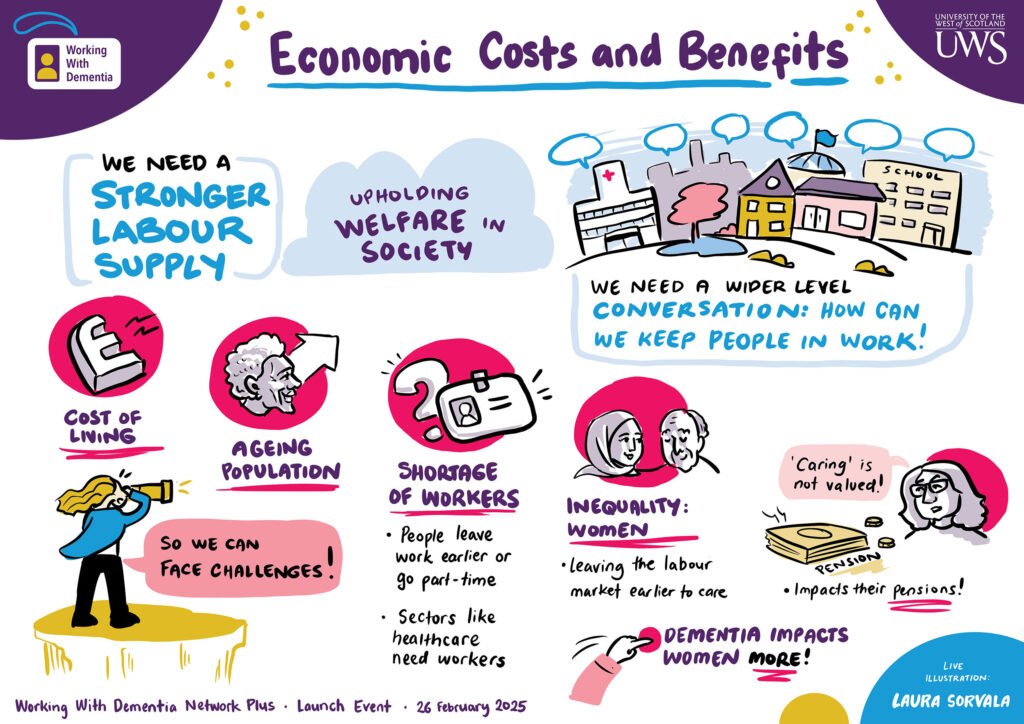
In the United Kingdom we are facing an ageing population and workforce shortages. An ageing population means that more people are leaving the workforce or going part time. There is a particular shortage of workers in the healthcare sector.
Inequalities are in evidence here, with women often leaving the labour market earlier to take on caring responsibilities.
Labour market shortages mean it is more cost effective to keep existing workers than to recruit new ones. Keeping people in the labour market means public spending in welfare is reduced and taxes continue to support the economy.
The issue for women can be even more stark – they are more likely to exit the labour market or to change their working hours to care for partner or relatives. As a society we have much to do to ensure that caring becomes valued by society.
Leaving the workforce for caring responsibilities has an impact on the earnings of a carer as well as the carer’s pension. We need to encourage wider conversations about how we can keep people in work.
What can we do as a network to address these challenges?